AFC U23 Asian Cup: Structure, Decision-Making and Market Insight
Professional analysis of the AFC U23 Asian Cup. Japan confirms its model, China progresses through structure, and Korea maintains intensity.
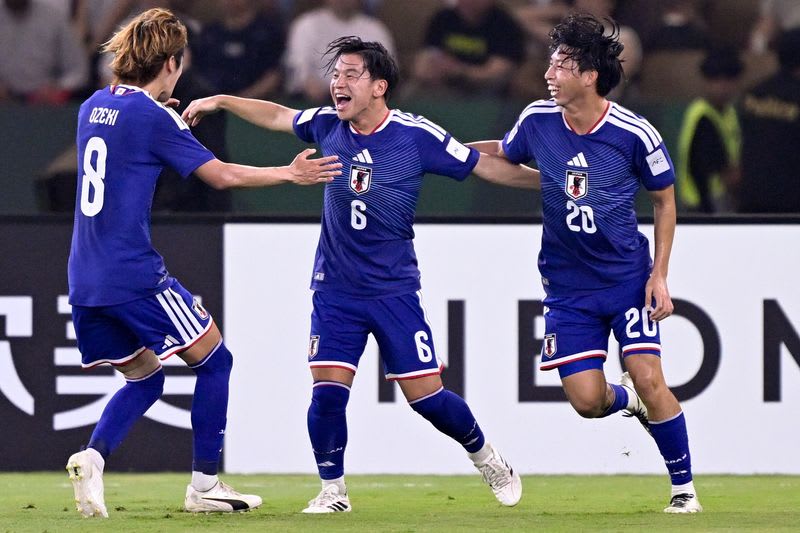
Japan confirms its model, China advances through process, Korea sustains intensity
The recently concluded AFC U23 Asian Cup delivers a clear message to clubs, sporting directors and scouting departments: Asian U23 football is now less predictable, yet highly uneven in terms of real transferability.
Japan reaffirmed its dominance and lifted the trophy. China reached a historic final through organisation and process. South Korea maintained its competitive identity, with familiar limitations.
This article focuses not on results, but on what these models mean for football decision-making and the transfer market.

1. The AFC U23 Asian Cup as a scouting filter
The AFC U23 Asian Cup has consolidated its role as:
- —Asia’s main U23 talent showcase
- —A real test of federations’ development work
- —A filter, not a market in itself
What this edition revealed
- —Higher average tactical discipline
- —Less individual improvisation
- —Clear gaps between nations with a defined model and those without
2. Japan, China and South Korea: three competitive models
The teams that shaped the tournament represent three distinct competitive pathways, each with clear implications for scouting and recruitment.
Japan U23: Asia’s structural benchmark
Japan confirmed that its advantage is structural, not cyclical.
- —A recognisable model across youth levels
- —Players trained to make decisions under pressure
- —Clear roles and automatisms
- —Natural control of finals and high-stakes matches
China PR U23: progress driven by process, not talent
China’s appearance in the final against Japan is unusual and must be analysed carefully.
China did not advance thanks to a golden generation, but through:
- —Improved defensive organisation
- —Fewer unforced errors
- —A recognisable starting XI
- —More mature management of knockout matches
The contribution of Antonio Puche to China

China’s competitive step forward reflects process-driven decisions:
- —Structuring the playing model
- —Prioritising discipline and role clarity
- —Accepting limitations
- —Competing more effectively without the ball
South Korea U23: intensity with clear limits
South Korea maintains a recognisable identity:
- —High tempo
- —Aggressiveness
- —Strong competitive mentality
- —Difficulty controlling long phases of matches
- —Heavy reliance on transitions
- —Limited game management when leading
3. The most influential players of the tournament

🇯🇵 Japan U23
Kosei Ogura – Central midfielder / late runner
Competitive impact- —Decisive through timing and late arrivals, not volume.
- —Two goals in the final underline composure under pressure.
- —Impact drops in chaotic, transition-only systems.
- —Low-volatility, high-reliability profile.
- —Strong fit for clubs prioritising structure and decision-making.
Yuto Ozeki – Interior midfielder
Competitive impact- —Early match influence, sets tempo and direction.
- —Provides continuity and tactical balance.
- —Limited individual dominance in isolation.
- —Ideal system midfielder.
- —Suited to teams valuing stability over flair.
Ryunosuke Sato – Attacking midfielder
Competitive impact- —Game manager in decisive moments.
- —Reliable execution under pressure (penalty in the final).
- —Not a high-output creative profile.
- —Risk-reduction player.
- —Valuable in clubs seeking control and calm.
🇨🇳 China PR U23
Li Hao – Goalkeeper
Competitive impact- —Continuity and resilience throughout knockout stages.
- —Key contributor to China reaching the final.
- —Limited build-up involvement under pressure.
- —Regionally reliable goalkeeper.
- —Competitive within Asia; limited short-term exportability.
Xu Bin – Defensive midfielder
Competitive impact- —Structural anchor in midfield.
- —Reduces chaos through positioning and discipline.
- —Low creative ceiling.
- —Discipline-first profile.
- —Fits compact, reactive systems.
Wang Yudong – Forward
Competitive impact- —Functional attacking reference through work rate and pressing.
- —Facilitates second-line arrivals.
- —Limited decisiveness in the final third.
- —Role-based forward.
- —Useful where collective structure outweighs scoring output.
🇰🇷 South Korea U23
Bae Hyun-Seo – Wide midfielder / winger
Competitive impact- —Provides width, pace and transition threat.
- —Key outlet in open-field situations.
- —Reduced effectiveness against organised blocks.
- —Energy-driven profile.
- —Best suited to vertical, high-tempo teams.
Kim Dong-Jin – Defensive midfielder
Competitive impact- —Tactical anchor ensuring midfield balance.
- —Maintains compactness and defensive order.
- —Limited influence when tempo control is required.
- —Reliable in mid/low-block systems.
- —Less suitable for possession-dominant models.
Kang Seong-Jin – Attacking midfielder / winger
Competitive impact- —Korea’s most consistent progression and transition outlet.
- —Takes responsibility in attacking phases.
- —Efficiency drops versus structured defences.
- —Dynamic attacking profile.
- —Higher upside in systems valuing mobility and intensity.
Executive takeaway
Across Japan, China and South Korea, the most influential players shared a common trait:
They reduced uncertainty rather than increased spectacle.For clubs, the real competitive edge lies in interpreting roles, context and reliability — not highlights.
4. Tactical trends in Asian U23 football
- —Scarcity of pure organising midfielders
- —Prevalence of box-to-box interiors
- —Full-backs valued more for athleticism than tactics
- —Poorly synchronised high pressing in several teams
5. Real implications for clubs and sporting directors
The AFC U23 Asian Cup should not trigger reactive signings.
Common mistakes
- —Recruiting based on highlights
- —Overvaluing national-team context
- —Ignoring financial and contractual fit
Best practice
- —Assess role + continuity
- —Evaluate cultural and competitive adaptation
- —Prioritise profiles that reduce risk
Conclusion

The AFC U23 Asian Cup sends three clear messages:
- —Japan sets the standard through system and decision-making
- —China narrows the gap through process
- —Korea sustains intensity, but lacks control
Looking to identify Asian talent with real club fit?
Discover how EFC supports scouting, market advisory and strategic decision-making during transfer windows. 👉 https://elitefc.co/
Related Articles

March 8, 2026
The Asian Football Market: A Recruitment Advantage
Over the past fifteen years, many European clubs have looked at Asia primarily as a commercial opportunity. Preseason tours. Regional sponsors. Fanbase expansion. But while many clubs saw marketing, others began to see something far more...
Read Analysis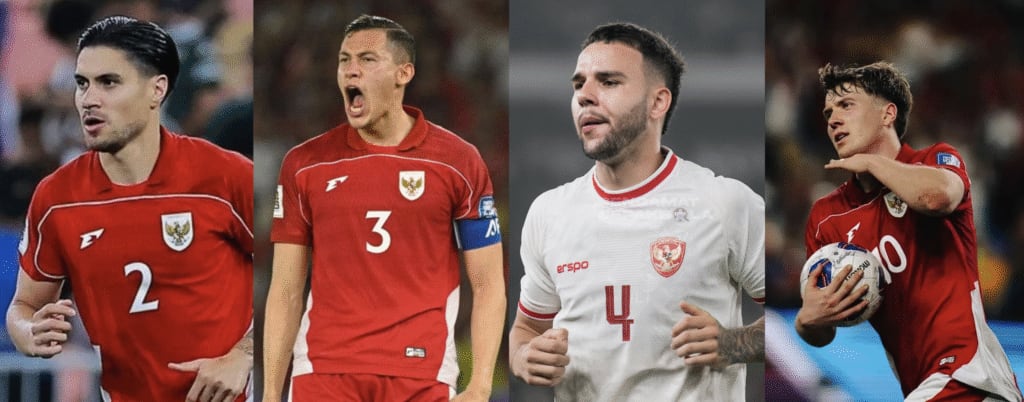
February 13, 2026
Indonesia Football Market 2026: Talent Acceleration and Structural Risk Management
Indonesia isn’t just growing, it’s repositioning itself competitively and strategically within Asian football. What we are seeing today is the result of deliberate, highpace changes post2022 that seek to elevate performance, credibility, and market...
Read Analysis
January 15, 2026
Why 80% of Failed Signings Are Not a Scouting Problem
If your last failed signing surprised you, that’s already a warning sign. When a transfer goes wrong, clubs tend to fall back on familiar explanations: “The player didn’t adapt.” “The data was positive.” “No one could have predicted it.” They are...
Read Analysis