
Indonesia Football Market 2026: Talent Acceleration and Structural Risk Management
Strategic analysis of Indonesia’s football market in 2026: talent acceleration, Dutch heritage naturalisation and structural risk management in ASEAN.
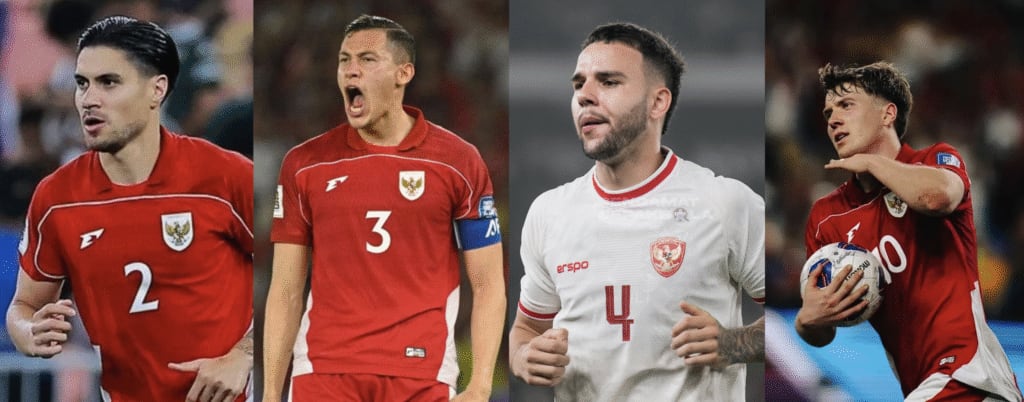
Indonesia isn’t just growing, it’s repositioning itself competitively and strategically within Asian football. What we are seeing today is the result of deliberate, high-pace changes post-2022 that seek to elevate performance, credibility, and market value. But growth isn’t linear, it is a transition from volume to structure under real pressure.
This piece isn’t a descriptive overview. It’s a strategic read for decision-makers, scouts, and international stakeholders who want actionable insight into why Indonesia matters and what remains fragile.

1. 2022: Structural Shock and Strategic Response
The tragedy at the Kanjuruhan Stadium in October 2022 wasn’t merely a security failure. It was a structural inflection point.

Indonesia’s football ecosystem was forced to confront its governance, operational capacity, and international reputation. The result has been material:
- —Operational cooperation with FIFA
- —Revised stadium safety and event protocols
- —Institutional oversight mechanisms
- —Formalisation of league governance
This shift is fundamental for any international club or agency evaluating the market.
2. Liga 1: Discipline over Chaos
The adoption of stable VAR implementation and a reinforced club licensing framework represents more than technical upgrades, it signals risk mitigation and professionalization.
In emerging markets, the greatest cost is uncertainty.
- —VAR reduces perception of inconsistent officiating
- —Licensing frameworks create baseline organizational discipline
- —Clubs are becoming more accountable
3. National Team: Competitive Acceleration is Real

Under coach Shin Tae-yong, Indonesia’s national team has shown improvements in:
- —Tactical coherence
- —Defensive organisation
- —Competitive execution against stronger opponents
Indonesia has pursued a clear heritage talent strategy, accelerating competitive capability through naturalization policies.
4. Naturalisation from the Netherlands: Competitive Boost, Structural Question

Dutch Heritage Naturalisation Strategy: Accelerated Talent Integration
Indonesia has strategically integrated players of Dutch descent, not by accident, but as a calculated method to import competitive experience and cultural football IQ.
This is not just about adding names, it’s about elevating structural competence.
Among the most influential naturalised players:
Jay Idzes (1999)
Centerback – Sassuolo (Italy)Idzes represents a structural defensive upgrade.
Strategic impact:
- —Organised defensive line management
- —Progressive passing from central zones
- —Leadership under pressure
- —Greater composure in build-up phases
Kevin Diks (1996)
Centerback – Borussia Mönchengladbach (Germany)Diks brings European competitive rhythm and structural maturity.
Strategic impact:
- —Tactical discipline
- —Strong duel competitiveness
- —Defensive versatility
- —Experience in high-pressure environments
Calvin Verdonk (1997)
Left Back – Lille (France)Verdonk provides balance and tactical stability on the left flank.
Strategic impact:
- —Positional intelligence
- —Controlled transitional defending
- —Reliable wide structure
- —Measured contribution in build-up phases
Ole Romeny (2000)
Forward – Oxford United (England)Romeny represents the offensive evolution of Indonesia’s naturalization model.
Strategic impact:
- —Vertical attacking movement
- —Pressing intensity
- —Transitional acceleration
- —Increased unpredictability in the final third
Strategic Impact on Game Model
These players have contributed to observable improvements:
✔ Better tactical organization ✔ Higher rhythm in transitional phases ✔ Stronger duel success rates ✔ Reduced structural errors under pressure
However, the competitive elevation remains dependent on hybrid input, imported talent blended with domestic bases that are still maturing.
This has strategic implications:
- —Naturalization accelerates competitive capability
- —It does not substitute systemic development
- —Long-term success requires domestic structural investments
5. Persisting Structural Risks
Despite progress, significant structural challenges remain:
⚠ Reputation and Safety
Kanjuruhan still influences Indonesia’s profile in international football governance discussions.
⚠ Competitive Integrity
Historical issues with match integrity and off-field governance require sustained mitigation.
⚠ Institutional Fragility
Political dynamics have previously influenced federation and hosting decisions, an ongoing risk for international partners.
Indonesia’s development is real, but contextually fragile.
6. Indonesia in ASEAN: Opportunity with Structural Complexity
From a strategic entry perspective, Indonesia stands out in ASEAN:
- —Larger population and market reach
- —Expanding football consumer base
- —Growing commercial sponsorship interest
- —A talent pipeline strengthened by diaspora engagement
For a European club, agent or investor, this is not a market for speculation. It’s a market for strategic execution with thoughtful risk frameworks.
7. Scenarios 2026–2030
Consolidation Scenario- —Stable integration of heritage and domestic talent
- —Continued professionalisation and governance improvements
- —Sustainable commercial growth
- —Indonesia as a regional competitor
- —Overreliance on naturalised players
- —Inconsistent institutional reform
- —Commercial volatility
- —Competitive stagnation
EFC Market Takeaways
- —Indonesia is an ASEAN priority: demographic scale and football passion make it strategically significant.
- —Naturalization accelerates performance: but it doesn’t guarantee structural resilience.
- —Institutional stability is the key risk: governance and safety perception still influence global partnership decisions.
- —Early, informed entry yields advantage: operators with deep insight will outperform reactive entrants.
Related Articles

March 8, 2026
The Asian Football Market: A Recruitment Advantage
Over the past fifteen years, many European clubs have looked at Asia primarily as a commercial opportunity. Preseason tours. Regional sponsors. Fanbase expansion. But while many clubs saw marketing, others began to see something far more...
Read Analysis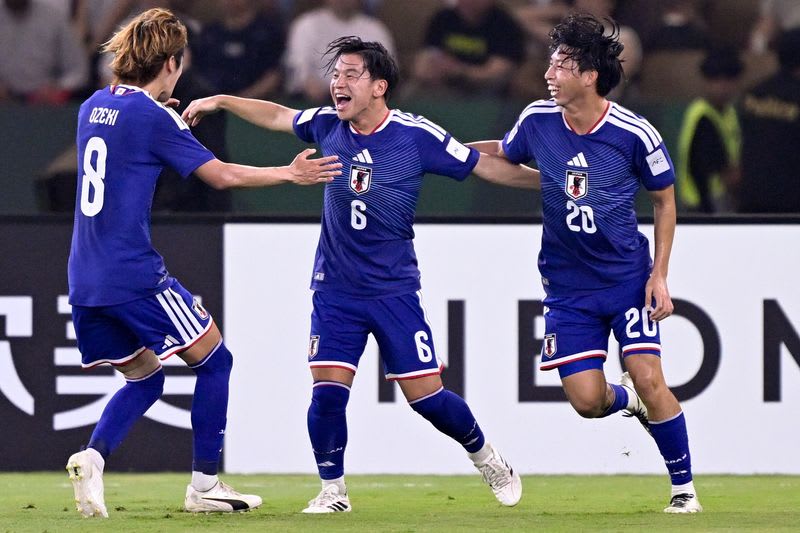
February 3, 2026
AFC U23 Asian Cup: Structure, Decision-Making and Market Insight
Japan confirms its model, China advances through process, Korea sustains intensity The recently concluded AFC U23 Asian Cup delivers a clear message to clubs, sporting directors and scouting departments: Asian U23 football is now less predictable,...
Read Analysis
January 15, 2026
Why 80% of Failed Signings Are Not a Scouting Problem
If your last failed signing surprised you, that’s already a warning sign. When a transfer goes wrong, clubs tend to fall back on familiar explanations: “The player didn’t adapt.” “The data was positive.” “No one could have predicted it.” They are...
Read Analysis