
Kashiwa Reysol and the Real Growth of Japanese Football
How Kashiwa Reysol nearly won the J.League without foreign players, proving the structural growth of Japanese football.
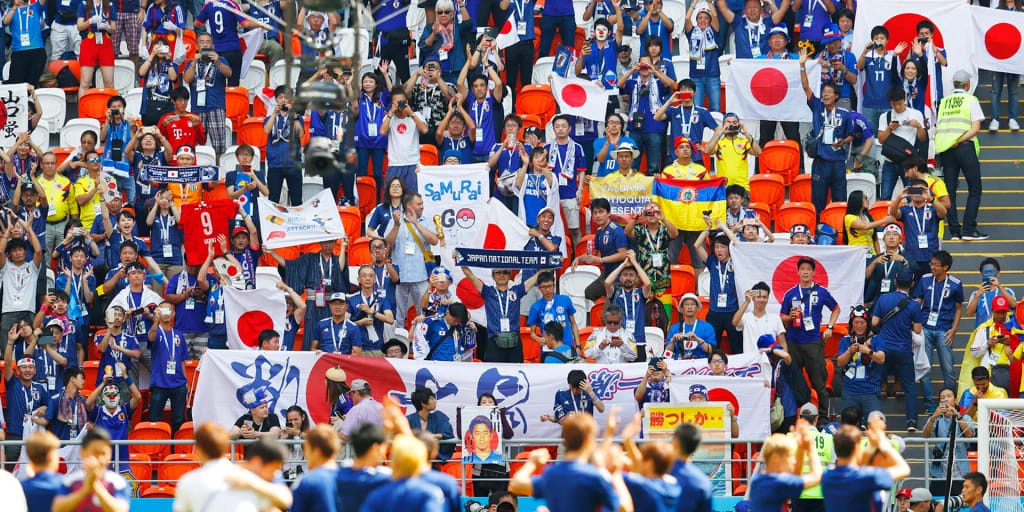
Why Japanese football no longer relies on potential, but delivers competitive performance
The growth of Japanese football is no longer a narrative of potential or long-term promise. This season has confirmed something more decisive: Japan has entered a post-development phase, where performance is no longer accelerated through imports, but sustained through structure.
The national team’s victory over Brazil offered a global signal. At club level, however, the clearest proof comes from Kashiwa Reysol—a team that competed for the J.League title until the final matchday without relying on foreign players. Not as an experiment, but as a strategic choice.
Kashiwa Reysol as the Core of Change

If one club encapsulates the current evolution of Japanese football development, it is Kashiwa Reysol. In the space of a single season, the club moved from transition to title contention, missing out by the narrowest of margins on the final day.
What gives this achievement real meaning is not the position itself, but the context:
- —A squad built almost entirely on domestic players
- —Consistency maintained across an entire season
- —Competitive parity against clubs with higher short-term dependency on foreign signings
Ricardo Rodríguez: Reducing Volatility, Creating Identity

The arrival of Ricardo Rodríguez marked a decisive inflection point at Kashiwa Reysol. His real impact was not tactical complexity, but something far more valuable in high-performance environments: predictability from within and unpredictability for opponents.
In just one season, his influence was so clear that he was named Manager of the Year in Japan, a recognition that reflects not only results, but the transformation of the club’s competitive behaviour.
Under his leadership, Kashiwa achieved:
- —Immediate order and stability
- —A recognisable identity independent of opponent or game state
- —Competitive consistency across pressure phases
- —Emotional control in decisive moments
Structure Before Names: A Different J.League Logic
While many J.League clubs still use foreign players as short-term problem solvers, Kashiwa Reysol invested in reducing dependency, not replacing it.
The model was clear:
- —Compact block organisation with controlled distances
- —Intelligent tempo management
- —Clearly defined roles over individual freedom
- —Error reduction as a competitive priority
The Modern Japanese Player: Ready for Demanding Systems
Kashiwa’s season also highlights the evolution of the Japanese footballer. Today’s profile is tactically educated, emotionally stable and capable of sustaining performance within demanding collective frameworks.
Key traits now visible:
- —Advanced tactical awareness
- —Faster decision-making under pressure
- —Responsibility within structured roles
- —Reduced need for contextual protection
From Club to National Team: One Systemic Pattern

Kashiwa Reysol is not operating in isolation. Its performance mirrors what the Japan national football team has shown this season, including the victory over the Brazil national football team.
That result was not emotional or circumstantial. It was built on:
- —Organisation
- —Competitive rhythm
- —Decision-making quality
Japan No Longer Imports Performance, It Produces It
For years, Japanese football relied on external inputs to accelerate competitiveness. Projects like Kashiwa Reysol now demonstrate that Japan can produce elite-level performance internally, even under maximum pressure.
For the international market—and particularly the Asian football scouting market—the implications are clear:
- —Japan is a reliable environment for evaluation
- —Context matters as much as talent
- —Processes outperform profiles in isolation
What Clubs and Scouts Should Take from Japanese Football
Key strategic takeaways:- —Evaluate context before talent
- —Prioritise players used in structurally demanding roles
- —Track consistency over highlights
- —Value error reduction as much as creation
- —Understand the system before the player
Conclusion: Kashiwa Reysol Is a Signal, Not an Exception
Kashiwa Reysol is not an anomaly. It is an advanced indicator.
In just one season under Ricardo Rodríguez, the club:
- —Redefined its identity
- —Competed at the top of the J.League without foreign players
- —Fought for the title until the final matchday
🇯🇵 Looking to scout Japanese players ready for European football or analyse J.League projects through a structured, data-driven approach? 👉 Contact EFC to explore how we work in scouting, club analysis and international expansion. /intelligence
Related Articles

March 8, 2026
The Asian Football Market: A Recruitment Advantage
Over the past fifteen years, many European clubs have looked at Asia primarily as a commercial opportunity. Preseason tours. Regional sponsors. Fanbase expansion. But while many clubs saw marketing, others began to see something far more...
Read Analysis
February 13, 2026
Indonesia Football Market 2026: Talent Acceleration and Structural Risk Management
Indonesia isn’t just growing, it’s repositioning itself competitively and strategically within Asian football. What we are seeing today is the result of deliberate, highpace changes post2022 that seek to elevate performance, credibility, and market...
Read Analysis
February 3, 2026
AFC U23 Asian Cup: Structure, Decision-Making and Market Insight
Japan confirms its model, China advances through process, Korea sustains intensity The recently concluded AFC U23 Asian Cup delivers a clear message to clubs, sporting directors and scouting departments: Asian U23 football is now less predictable,...
Read Analysis