
Asian Football at the 2026 FIFA World Cup: Talent Is Not Enough
Discover what the 2026 FIFA World Cup revealed about Asian football, player development and why clubs need a new framework to analyse Asian markets.
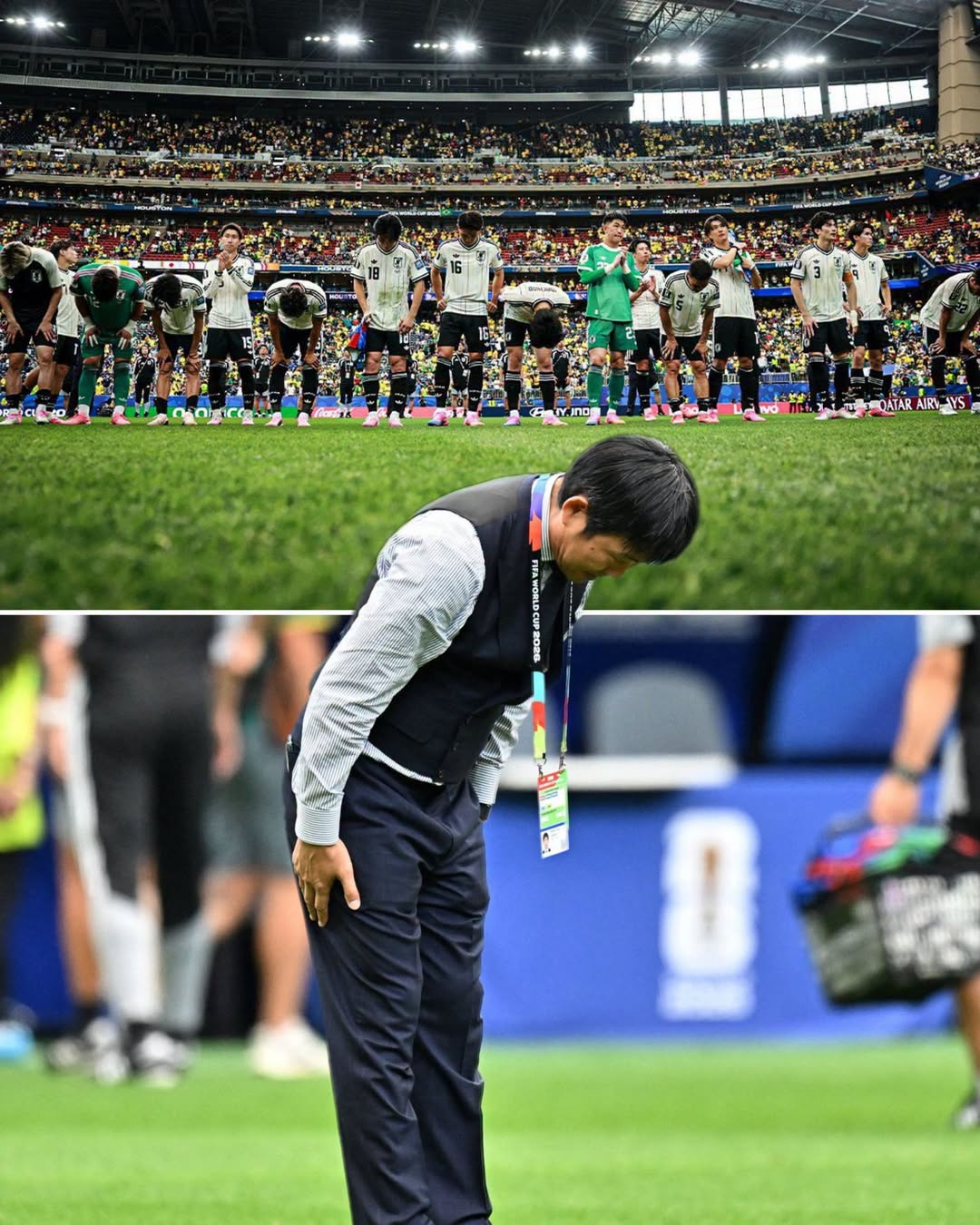
Executive Summary
Every FIFA World Cup produces winners and losers.
It also produces something far more valuable: evidence.
Although the 2026 FIFA World Cup continues, the journey for every Asian national team has already come to an end. Nine AFC nations qualified for the tournament, yet only Japan and Australia progressed beyond the group stage.
For many observers, that statistic alone suggests a disappointing campaign for Asian football.
We believe that conclusion is incomplete.The tournament did not expose a lack of talent.
It revealed something far more significant.
> Asia is not one football market. It is a collection of football ecosystems operating at completely different stages of development.
That is the real lesson of the tournament.
Because a World Cup measures far more than match results.
It reflects the quality of player development, export capacity, institutional continuity, coaching structures and the overall maturity of the ecosystem producing elite footballers.
Viewed through that lens, five conclusions emerge.
- —Japan has reaffirmed itself as Asia's most mature football ecosystem.
- —South Korea continues producing elite talent, but questions around competitive evolution remain.
- —Uzbekistan has taken another significant step towards becoming one of Asia's most promising emerging football markets.
- —Investment alone does not create international competitiveness.
- —Asian football can no longer be analysed as a single market.
Looking Beyond Results
Every major international tournament generates the same pattern of analysis.
Who qualified.
Who failed.
Who exceeded expectations.
Who disappointed.
Yet results rarely tell the complete story.
A World Cup does not create trends. It reveals them.National teams are simply the final outcome of decisions made years earlier.
Long before the opening match, every ecosystem has already invested—or failed to invest—in youth development, coaching education, league professionalisation, international player pathways and institutional stability.
A World Cup simply exposes the current state of those decisions.
For recruitment departments, that distinction is fundamental.
The objective is not to identify the player who had an outstanding tournament.
The objective is to understand which football ecosystems are most likely to produce elite players over the next decade.
That changes the conversation completely.
Instead of asking:
> Which national team performed best?
The better question becomes:
> Which football ecosystem consistently produces transferable talent?
That is where football intelligence begins.
Not when the tournament ends.
But when the tournament is used to interpret the evolution of each football ecosystem.
---
Japan: Confirmation, Not Surprise
If one nation leaves the 2026 FIFA World Cup with its reputation strengthened, it is Japan.
Not because it reached a specific stage of the tournament.
Not because of one memorable result.
But because it once again demonstrated what a mature football ecosystem looks like.That distinction is important.
For many years, Japan was viewed as an emerging football nation producing technically gifted players.
That narrative no longer applies.
Japan no longer surprises. Japan confirms.The discussion is no longer whether Japan can produce elite players.
The real question is:
> Where do the next market inefficiencies still exist inside one of the world's most mature football ecosystems?
Over the past two decades, Japanese football has built one of the most consistent player development systems anywhere in the game.
Its competitive advantage is not simply the quality of its players.
Its greatest strength is the quality of the system that produces them.Japan develops much more than footballers.
It consistently produces:
- —tactical discipline;
- —methodological consistency;
- —structured development pathways;
- —players capable of adapting to European football;
- —a competitive culture extending from grassroots football to the professional game.
Each player arrives with a highly interpretable competitive background.
That reduces uncertainty.
And reducing uncertainty ultimately reduces recruitment risk.
For clubs, that has enormous value.
However, the World Cup also reinforces another important reality.
Japan is no longer an inefficient market.The country's top prospects are now permanently monitored by European clubs.
Transfer fees have increased.
Competition has intensified.
The market has become more efficient.
As a result, competitive advantage is gradually shifting towards segments that remain underexplored.
Those include:
- —Under-23 players
- —J2 League
- —University Football
- —Late developers
- —Players with limited international exposure
Because mature markets do not stop producing opportunities.
They simply require better intelligence to find them.
---
EFC Takeaway
🇯🇵 Japan
Current Position✔ Asia's most mature football ecosystem
✔ Proven export model
✔ High player transferability
✔ Long-term development consistency
⚠ Increasing competition from European clubs
Where EFC Sees Opportunity- —Under-23 profiles
- —J2 League
- —University Football
- —Emerging players before international visibility
---
South Korea: Elite Talent, Structural Questions
South Korea remains one of Asia's strongest producers of elite footballers.
Its technical quality, physical intensity and tactical discipline continue to make Korean players highly attractive to European clubs.
The country has consistently produced footballers capable of succeeding in the Bundesliga, Premier League, Ligue 1 and other major European competitions.
From a talent production perspective, South Korea remains one of Asia's premium export markets.
However, the 2026 FIFA World Cup leaves a different question.
The issue is no longer whether South Korea produces talent. The issue is whether the ecosystem is maximising that talent.Unlike Japan, whose competitive identity is increasingly built around the strength of its football structure, South Korea continues to rely heavily on exceptional generations of players.
That distinction matters.
Elite players can emerge almost anywhere.
Elite ecosystems produce them consistently.The World Cup does not suggest that South Korea has stopped producing footballers.
It suggests that the gap between player quality and collective performance deserves closer analysis.
For clubs, this does not reduce the attractiveness of the Korean market.
Quite the opposite.
It reinforces the importance of evaluating each player within the context of the ecosystem that produced them.
Because recruitment decisions should never be based solely on tournament results.
They should be based on understanding whether the underlying football system continues to create competitive advantages.
---
EFC Takeaway
🇰🇷 South Korea
Current Position✔ Elite player production
✔ Strong export history
✔ High tactical discipline
⚠ Questions around competitive evolution
Where EFC Sees Opportunity- —Next-generation exports
- —U23 international profiles
- —Players before European market acceleration
---
Uzbekistan: A Challenger Ecosystem Worth Watching
Perhaps the tournament's most significant long-term story is not Japan.
It is Uzbekistan.
The country did not need to reach the knockout stages to validate its progress.
Simply qualifying for its first FIFA World Cup represented the latest signal that years of investment in youth development, coaching education and football infrastructure are beginning to generate tangible results.
That distinction matters.
One successful tournament does not create an export model.
But it can confirm that an ecosystem is moving in the right direction.
The challenge for clubs is distinguishing between a signal and a proven export system.Uzbekistan increasingly resembles what EFC defines as a Challenger Market.
Its infrastructure is improving.
Its youth programms continue producing results.
Its international visibility is growing.
Yet market valuations have not fully adjusted to those developments.
That creates asymmetry.
And asymmetry is where recruitment opportunities exist.
The clubs that wait until Uzbekistan becomes an established export market will almost certainly arrive too late.
Competitive advantage belongs to those capable of identifying ecosystem development before market consensus emerges.
---
EFC Takeaway
🇺🇿 Uzbekistan
Current Position✔ Emerging football ecosystem
✔ Improving development infrastructure
✔ Increasing international visibility
✔ High market asymmetry
Where EFC Sees Opportunity- —Early market positioning>
- —Emerging international profiles
- —Long-term recruitment strategies
---
Investment Alone Does Not Build Football Ecosystems
The tournament also reinforced another important lesson.
Money accelerates football development. It does not replace it.Several Asian countries have invested heavily in football over the past decade.
Modern stadiums.
Elite training facilities.
Foreign coaches.
International players.
Large-scale infrastructure.
All of these initiatives contribute to football development.
But none of them automatically produce international competitiveness.
Football ecosystems require much more.
They require:
- —long-term planning;
- —coaching education;
- —structured player pathways;
- —institutional continuity;
- —competitive domestic environments;
- —cultural identity.
That distinction explains why some nations continue producing elite footballers generation after generation while others struggle to transform financial resources into sustained international success.
---
Why This Matters for Sporting Directors
For clubs, the 2026 FIFA World Cup should not change where they scout.
It should change how they evaluate football markets.
The tournament reinforces five practical lessons.
1. Evaluate ecosystems before evaluating players.
Understanding the environment that produces a player is often more valuable than analyzing one tournament.
2. Separate visibility from market efficiency.
The most visible market is rarely the most undervalued.
3. Infrastructure matters more than headlines.
Strong development systems consistently outperform short-term success.
4. Emerging markets create asymmetric opportunities.
The best value is usually identified before international consensus develops.
5. Recruitment begins with market intelligence.
Players are temporary.
Football ecosystems are long-term competitive assets.
---
Final Thoughts
The 2026 FIFA World Cup has not changed Asian football. It has simply made visible a reality that has been developing for years.Japan confirmed the strength of its football ecosystem.
South Korea reminded us that producing elite players is not enough without continuous structural evolution.
Uzbekistan demonstrated that emerging ecosystems deserve far greater attention than their current market value suggests.
The broader lesson is even more important.
Asia should no longer be viewed as a single football market.It is a network of ecosystems operating at different stages of maturity, competitiveness and international integration.
For clubs, this changes everything.
The organisations that dominate recruitment over the next decade will not necessarily be those that scout more players.
They will be those that better understand the systems producing those players.
Because in modern football...
Talent creates headlines. Systems create sustainable competitive advantage.---
About Elite Football Consultancy
Elite Football Consultancy (EFC) is an independent Football Market Advisory specialising in Asian football markets.
We support clubs, sporting directors, investors and football organisations through:
- —Football Market Intelligence
- —Recruitment Strategy
- —Transfer Advisory
- —International Football Development
If your organisation is exploring opportunities across Asia, we would be pleased to discuss how EFC can support your recruitment strategy.
🌐 https://elitefc.co
Related Articles
June 12, 2026
Why Japan Is Becoming One of Football's Most Strategic Global Partners
Read Analysis
May 19, 2026
Why Strong Foreign Signings Still Fail In Asian Football
Many foreign signings fail in Asian football not because of talent, but because clubs misread tactical fit, adaptation risk, league context and recruitment structure. This case study analyzes why strong CVs do not always translate into successful recruitment across Asian football markets.
Read Analysis
May 3, 2026
Asian Football Strategy: Where to Enter, Compete and Win in Asia
The Asian football market is not defined by geography, but by structure. This analysis explains how AFC competition slots shape recruitment strategy, market access and decision-making across Asia.
Read Analysis