
Why Strong Foreign Signings Still Fail In Asian Football
Why do experienced foreign players fail in Asian football? EFC analyzes tactical mismatch, adaptation risk, salary inefficiency and recruitment mistakes across Asian football markets.

1. The Real Problem Is Not Talent
Every transfer window, clubs across Asia repeat the same mistake.
They sign the player. But they fail to evaluate the environment.
The result is familiar:
- —High Salaries
- —Limited Sporting Impact
- —Structural Imbalance
- —Wasted Foreign Player Slots
- —Expensive Recruitment Failures
They are evaluated by their ability to perform inside a completely different competitive ecosystem.
And this is where many clubs fail.
Not because they lack scouting information.
But because they misread:
- —Tactical Compatibility
- —League Context
- —Adaptation Probability
- —Motivational Profile
- —Operational Risk
2. A Strong CV Does Not Guarantee League Fit
One of the biggest misconceptions in football recruitment is assuming that player quality is universal.
It is not.
A player can succeed in one ecosystem and struggle completely in another.
Especially in Asia, where leagues differ significantly in:
- —Tactical Structure
- —Physical Intensity
- —Climate Conditions
- —Travel Requirements
- —Emotional Pressure
- —Cultural Adaptation
- —Squad Dependency On Foreign Players
> “Is he a good player?”
The real question is:
> “Is he the right player for this specific league, club, coach and competitive environment?”
That difference changes everything.
3. Asia Is Not One Football Market
One of the biggest recruitment mistakes clubs make is treating Asia as a single football environment.
It is not.
Especially from an operational and recruitment perspective.
Japan, South Korea, China, Thailand, Indonesia, Malaysia or Vietnam all create completely different demands for foreign players.
Japan
Tactical Intensity And Collective DisciplineSouth Korea
Physical Intensity And TempoChina
Pressure, Expectations And Financial DistortionIndonesia
Climate, Emotional Pressure And AdaptationThailand
Offensive Responsibility And Irregular RhythmsVietnam / Malaysia
Structural And Competitive InconsistencyA player who fits Japan may struggle in Indonesia.
A player who performs in Thailand may not adapt to Korea.
A successful profile in China may fail in leagues where the tactical structure and physical rhythm are completely different.
This is where recruitment departments make critical mistakes: they evaluate the player without evaluating the environment.
4. Tactical Mismatch: Good Player, Wrong Ecosystem
One of the main reasons foreign players fail in Asia is tactical mismatch.
Many arrive from leagues where:
- —The Game Is Slower
- —Possession Is More Controlled
- —Teams Are Tactically Stable
- —Teammates Solve Situations More Efficiently
- —Constant Transitions
- —High Physical Exposure
- —Direct Attacks
- —Open Spaces
- —Less Tactical Protection
- —Faster Adaptation To Chaotic Game States
A midfielder who depends on structured build-up may struggle in transition-heavy leagues.
A striker who relies on service may disappear in teams that cannot sustain possession.
A center-back used to compact defensive systems may suffer defending large spaces repeatedly.
The issue is not talent.
The issue is contextual compatibility inside the competitive ecosystem.
5. Climate And Travel Are Competitive Variables
This factor is massively underestimated.
Especially in Southeast Asia.
Humidity, heat, travel fatigue and recovery conditions directly affect:
- —Physical Intensity
- —Injury Probability
- —Recovery Speed
- —Cognitive Sharpness
- —Availability Consistency
- —Decision-Making Quality
- —Long Domestic Flights
- —Extreme Humidity
- —Compressed Schedules
- —Unstable Pitches
- —Different Recovery Standards
- —Completely Different Daily Routines
But they often determine whether the signing succeeds or fails.
6. The Foreign Player Is Expected To Change Everything
In many Asian clubs, foreign players are not considered complementary pieces.
They are expected to become:
- —The Best Player In The Team
- —The Difference-Maker
- —The Leader
- —The Goalscorer
- —The Face Of The Project
- —The Justification For Investment
A player who had a secondary role in Europe may suddenly become the central figure of the entire sporting project.
Not every player is prepared for that responsibility.
Especially when:
- —Adaptation Is Difficult
- —Results Are Unstable
- —Media Pressure Increases
- —Supporters Expect Immediate Impact
7. Motivation Is One Of The Most Misread Variables
Some players move to Asia because they genuinely want:
- —A New Competitive Challenge
- —International Experience
- —Leadership Responsibility
- —Long-Term Sporting Opportunities
- —The Salary Is Attractive
- —Their European Market Has Declined
- —They Are Approaching The Final Stage Of Their Career
- —They Lack Competitive Opportunities Elsewhere
But if clubs do not evaluate motivation correctly, recruitment risk increases significantly.
Some warning signs include:
- —Recent Physical Decline
- —Recurring Injury History
- —Major Reduction In Minutes Played
- —Limited International Adaptability
- —Career Decisions Driven Exclusively By Salary
- —Poor Behavioral Consistency In Previous Clubs
8. Star Signing vs Functional Signing
One of the biggest recruitment differences in Asia is the distinction between:
- —Star Signings
- —Functional Signings
Star Signing
Usually driven by:- —Reputation
- —Marketing Value
- —Historical Success
- —Media Attention
- —Commercial Visibility
Functional Signing
Usually driven by:- —Tactical Fit
- —Role Clarity
- —Adaptation Probability
- —Salary Efficiency
- —Squad Balance
- —League Compatibility
And this is where recruitment risk increases dramatically.
9. Successful Player vs Successful Signing
This distinction is critical.
A player can perform individually and still become:
- —A Poor Financial Investment
- —A Structural Imbalance
- —A Recruitment Inefficiency
- —Individual Performance
- —Overall Strategic Impact
- —Score Goals
- —Generate Visibility
- —Increase Commercial Attention
- —Distorting Salary Structures
- —Blocking Squad Flexibility
- —Increasing Tactical Dependency
- —Limiting Future Recruitment Options
10. EFC Foreign Player Risk Matrix™
Tactical Fit
- —Low Risk: Similar Playing Style
- —High Risk: Different Football Ecosystem
Motivation
- —Low Risk: Competitive Ambition
- —High Risk: Financial-Only Move
Physical Adaptation
- —Low Risk: Previous Tropical Experience
- —High Risk: No Adaptation History
Squad Role
- —Low Risk: Clear Tactical Role
- —High Risk: Undefined Expectations
Salary Efficiency
- —Low Risk: Sustainable Structure
- —High Risk: Wage Distortion
Cultural Integration
- —Low Risk: International Experience
- —High Risk: First Move Abroad
League Compatibility
- —Low Risk: Proven Fit In Similar Environments
- —High Risk: Completely Different Football Demands
Exit Risk
- —Low Risk: Flexible Contract Structure
- —High Risk: High Salary / Difficult Exit
11. What Clubs Should Evaluate Before Signing A Foreign Player
Tactical Questions
- —Does The Player Fit The Real Playing Model?
- —Can The Team Maximize His Strengths?
- —Is The League Intensity Compatible With His Profile?
Psychological Questions
- —Is The Player Still Competitively Ambitious?
- —Can He Handle Leadership Expectations?
- —How Does He React Under Instability And Pressure?
Environmental Questions
- —Can He Adapt To Climate And Travel Demands?
- —Does He Have Previous International Adaptation Experience?
- —Is His Family And Lifestyle Situation Stable?
Financial Questions
- —Does The Salary Structure Remain Sustainable?
- —What Happens If The Signing Fails?
- —Is There Realistic Resale Or Exit Flexibility?
They evaluate risk architecture around the player.
12. Why Clubs Misread Foreign Recruitment
Most failed foreign signings are not random mistakes.
They are process failures.
Common recruitment errors include:
- —Decision-Making Under Time Pressure
- —Lack Of Structured Planning
- —No Clear Plan B Or C
- —Overvaluation Of Reputation
- —Agent-Driven Recruitment
- —Poor Understanding Of League Intensity
- —Ignoring Adaptation Probability
- —Confusing Commercial Value With Football Value
More scouting does not automatically reduce risk.
Better decision control does.13. Successful Recruitment Requires More Than Talent Identification
Successful foreign recruitment is rarely determined by individual talent alone.
It is usually the result of a well-structured recruitment ecosystem:
- —Tactical Clarity
- —Role Definition
- —Adaptation Support
- —Realistic Expectations
- —Operational Alignment
It begins there.
14. Case Studies Across Asian Football
Carlos Tévez — Shanghai Shenhua
Carlos Tévez arrived in China with one of the strongest reputations in world football.
However, the overall sporting and financial impact of the project did not fully align with the expectations generated by the investment and profile.
The challenge was not historical quality.
The challenge involved:
- —Adaptation
- —Motivation
- —Physical Condition
- —Environmental Fit
- —Return On Investment Relative To Salary Expectations
Bojan Krkić — Vissel Kobe
Bojan arrived in Japan with elite-level European experience and major name recognition.
But injuries, rhythm issues and continuity problems limited his influence significantly.
This demonstrates another important recruitment reality:
> Historical reputation does not eliminate operational risk.
Hulk — Shanghai SIPG
Hulk performed well individually in China and produced strong numbers.
However, his case also highlighted how high-dependency foreign signings can influence:
- —Tactical Balance
- —Salary Concentration
- —Offensive Centralization
- —Long-Term Squad Sustainability
Some signings work individually while still creating structural challenges around the squad.
Andrés Iniesta — Vissel Kobe
Iniesta is one of the clearest examples of successful contextual adaptation in Asia.
Why did it work?
Because:
- —The Tactical Environment Suited His Profile
- —The Football Environment And Project Structure Maximized His Strengths
- —The J-League Valued Technical Intelligence
- —Professionalism And Mentality Aligned Perfectly With Japanese Football Culture
It was about compatibility between:
- —Player
- —Club
- —League
- —Culture
- —Tactical Structure
Chanathip Songkrasin — Consadole Sapporo
Chanathip became one of the best examples of regional adaptation inside Asian football.
His mobility, tactical intelligence and technical profile adapted naturally to the rhythm of Japanese football.
This case also demonstrates: Asian player pathways inside the continent can sometimes generate lower adaptation risk than direct Europe-to-Asia transitions.
15. The Hidden Cost Of Failed Foreign Signings
A failed foreign signing does not only affect:
- —Performance
- —Salary Structure
- —Squad Balance
- —Future Recruitment Flexibility
- —Coach Stability
- —Dressing Room Hierarchy
- —Supporter Pressure
- —Ownership Confidence
- —Transfer Timing In The Next Window
In leagues with limited foreign player slots, the impact becomes even more critical.
A failed foreign signing is not simply a sporting problem.
It is a strategic allocation failure.
16. Adaptation Is Not A Soft Factor
Many clubs still treat adaptation as secondary.
In reality, adaptation is a competitive variable.
Language, communication, culture, emotional integration and daily life stability directly affect performance.
Especially in Asia, where cultural differences can be significant.
A player who feels disconnected from:
- —Teammates
- —Staff
- —Supporters
- —Local Culture
- —Daily Lifestyle
Elite recruitment departments do not only scout players.
They prepare environments where players can succeed.
17. The Asian Market Punishes Poorly Structured Recruitment Processes
Modern football no longer suffers from lack of information.
Access to player information is no longer the main competitive advantage.
Most professional clubs today have broad access to player information through:
- —Databases
- —Scouting Platforms
- —Video
- —Data
- —Performance Metrics
- —Global Player Visibility
This is why many foreign signings fail despite strong CVs.
Because the process focused on:
- —Reputation
- —Historical Performance
- —Market Value
- —Name Recognition
- —Tactical Fit
- —League Compatibility
- —Adaptation Probability
- —Motivational Profile
- —Salary Efficiency
- —Operational Sustainability
- —Environmental Context
The risk increases when clubs prioritize reputation over contextual compatibility.
18. Final Conclusion
In modern football, information is no longer the competitive advantage.
Most professional clubs already have access to players.
The real advantage comes from:
- —Filtering Correctly
- —Reducing Decision-Making Error
- —Understanding Context Better Than The Market
It is determined by the best fit.
Planning Your Next Foreign Signing In Asia?
Elite Football Consultancy supports clubs with:
- —Foreign Player Evaluation
- —Tactical Fit Analysis
- —Recruitment Risk Assessment
- —League Compatibility Analysis
- —Transfer Decision Support Across Asian Football Markets
Related Articles
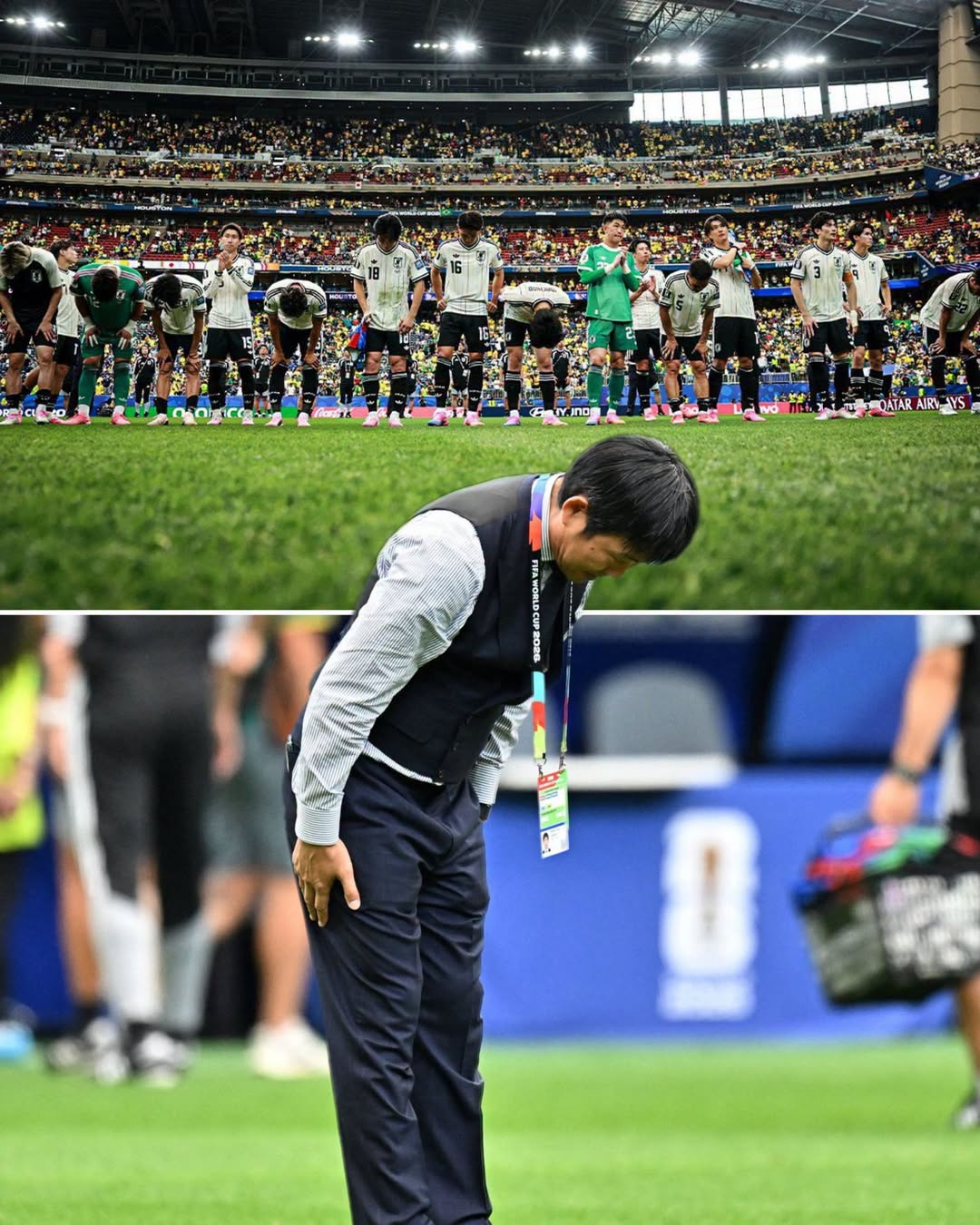
July 2, 2026
Asian Football at the 2026 FIFA World Cup: Talent Is Not Enough
The 2026 FIFA World Cup did not expose a lack of talent in Asian football. It revealed something far more important: Asia is no longer one football market. This article analyses what Japan, South Korea, Uzbekistan and other Asian nations tell us about the future of football recruitment and why clubs need a new framework to understand the region.
Read Analysis
June 12, 2026
Why Japan Is Becoming One of Football's Most Strategic Global Partners
Read Analysis
May 3, 2026
Asian Football Strategy: Where to Enter, Compete and Win in Asia
The Asian football market is not defined by geography, but by structure. This analysis explains how AFC competition slots shape recruitment strategy, market access and decision-making across Asia.
Read Analysis