
Why Japan Is Becoming One of Football's Most Strategic Global Partners
Discover how Japan is evolving from a player export market into a strategic global football partner through club partnerships, corporate investment, knowledge exchange and international influence.
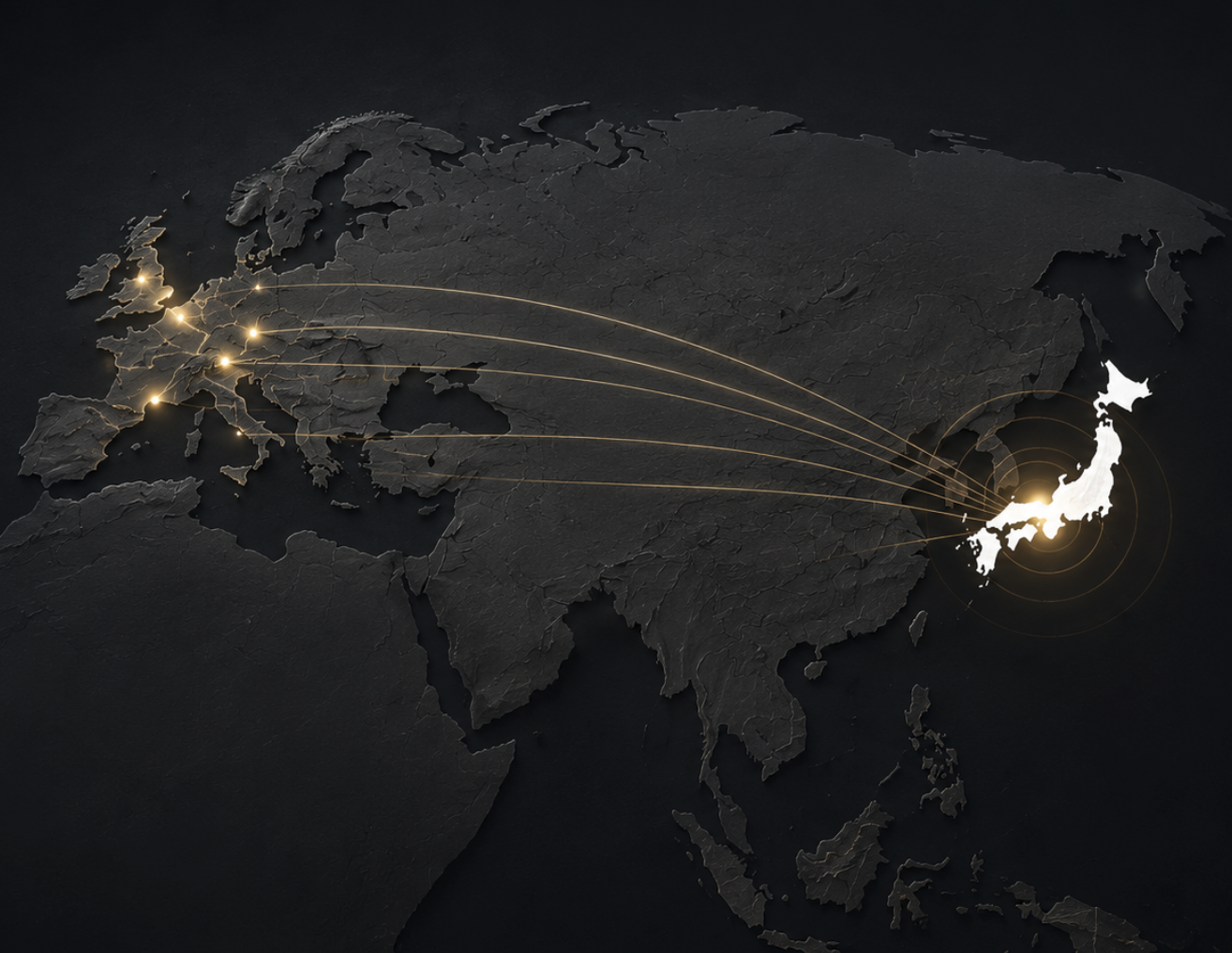
For years, Japan has been viewed primarily as a producer of football talent.
The success of players such as Kaoru Mitoma, Takefusa Kubo, Wataru Endo and Daichi Kamada has reinforced the perception that Japan’s greatest contribution to global football is its ability to develop players capable of competing at the highest levels.
But that perception is becoming increasingly outdated.
Today, Japan is emerging as one of the most strategically connected football ecosystems in the world. While much of the industry's attention remains focused on Middle Eastern investment, North American ownership groups and private equity activity, Japan has been quietly expanding its influence through a different model.
A model based on partnerships, knowledge exchange, institutional collaboration and long-term strategic thinking.
The result is a football ecosystem that is no longer simply exporting talent.
It is becoming an increasingly important strategic partner within global football.More Than a Talent Market
Most football discussions involving Japan still focus on player development and exports.
That focus is understandable.
Over the last decade, Japanese football has established one of the most effective player development systems in world football, consistently producing technically refined, tactically adaptable and internationally competitive players.
However, the most significant evolution is taking place beyond the transfer market.
Japanese clubs, corporations and football institutions are expanding their international footprint through strategic partnerships, commercial collaborations and cross-border football projects.
The objective is no longer limited to producing players.
The objective is to participate directly in the construction of the global football ecosystem.The Growing Network of Club Partnerships
In recent years, an increasing number of European clubs have established formal relationships with Japanese organisations.
Examples include:
- —Aston Villa – Vissel Kobe
- —Wolverhampton Wanderers – Shonan Bellmare
- —Bournemouth – Kyoto Sanga
- —Everton – Nagoya Grampus
- —Borussia Dortmund – Cerezo Osaka
- —Eintracht Frankfurt – Urawa Red Diamonds
- —VfL Bochum – Júbilo Iwata
In reality, they reflect a broader strategic trend.
European clubs are increasingly viewing Japan as a long-term partner for talent identification, commercial development and football knowledge exchange.Unlike many short-term international collaborations, these relationships are often built around mutual learning, market access and long-term strategic alignment.
That distinction is important.
The value is not simply in signing players.
The value is in building sustainable football networks.Why European Clubs Are Looking at Japan Differently
Japan offers a combination of characteristics that are increasingly difficult to find within a single football market.
These include:
- —Strong governance structures
- —Financial stability
- —Long-term planning
- —High-quality player development
- —Commercial sophistication
- —Institutional credibility
- —International openness
And Japan offers exactly that.
Unlike many emerging football markets, where sporting, financial or political instability can create significant uncertainty, Japan provides an environment where long-term projects can be developed with confidence.
This helps explain why so many European organisations are expanding their relationships with Japanese clubs, companies and institutions.Corporate Investment Is Becoming a Strategic Tool
The Japanese influence on European football extends beyond club-to-club relationships.
Corporate involvement is becoming an increasingly important part of the equation.
One of the most notable recent examples is Yanmar's acquisition of Almere City in the Netherlands.
The move reflects a broader trend in which Japanese companies are looking beyond sponsorship and exploring opportunities to participate directly in football operations and ownership structures.
Other Japanese groups have also explored investment opportunities across Belgium, the Netherlands and Scandinavia.
These markets are particularly attractive because they provide efficient development pathways into Europe's major leagues.
For investors, football ownership is not simply about sporting performance.
It is increasingly viewed as a platform for international growth, talent development and long-term strategic positioning.Germany and Japan: A Model of Long-Term Cooperation
Perhaps no European country illustrates Japan's football relationships better than Germany.
The collaboration between Bayern Munich and the Japan Football Association (JFA) extends far beyond traditional partnership agreements.
Their cooperation includes:
- —Youth development initiatives
- —Coaching education programmes
- —Knowledge exchange
- —Training camps
- —International competitions
- —Technical collaboration
More broadly, Bundesliga clubs have consistently been among the most active European organisations operating in Japan.
This is not accidental.
German football has long recognised the strategic value of Japanese football, both as a talent market and as a source of institutional excellence.The JFA's Global Knowledge Network
While club partnerships and corporate investments often receive the headlines, the Japan Football Association (JFA) may be the most important driver of Japan's international influence.
For decades, the JFA has pursued a deliberate strategy based on technical development, international collaboration and continuous learning.
Its relationships with organisations such as:
- —The German Football Association (DFB)
- —The French Football Federation (FFF)
- —UEFA
- —ASEAN football organisations
This approach reflects one of the defining characteristics of Japanese football.
The pursuit of continuous improvement through learning.Rather than relying solely on financial investment, Japan has focused on developing expertise, systems and institutional capabilities.
Over time, this has become one of its greatest competitive advantages.
From Football Market to Strategic Partner
The football industry often categorises countries as either talent markets, commercial markets or investment markets.
Japan increasingly belongs to all three categories simultaneously.
Today, it represents:
- —A producer of elite talent
- —A source of football investment
- —A commercial growth market
- —A knowledge-sharing ecosystem
- —A strategic international partner
What This Means for Clubs
As football becomes more interconnected, competitive advantage increasingly comes from access to networks rather than access to information alone.
The organisations that build strong relationships within the Japanese football ecosystem gain access to:
- —Talent pipelines
- —Commercial opportunities
- —Institutional knowledge
- —International partnerships
- —Long-term strategic collaboration
And in a football industry where margins between success and failure continue to narrow, they can become significant differentiators.
Conclusion
The football industry often focuses on headline acquisitions, major ownership groups and high-profile investment announcements.
Japan's influence has developed differently.
Through consistency.
Through partnerships.
Through knowledge sharing.
And through long-term strategic planning.
For years, Japan was recognised primarily for its ability to produce players.
Today, it is becoming something much more valuable.
A strategic partner within the global football ecosystem.For clubs, investors and football executives seeking to understand the future direction of international football, recognising Japan's growing influence is no longer optional.
It may become a competitive advantage.---
Elite Football Consultancy supports clubs, executives and football organisations through market intelligence, recruitment advisory and international football strategy, with a particular focus on Asia's evolving football landscape.
How is your organisation approaching Japan today: as a talent market, a commercial opportunity, or a long-term strategic partner?Related Articles
July 2, 2026
Asian Football at the 2026 FIFA World Cup: Talent Is Not Enough
The 2026 FIFA World Cup did not expose a lack of talent in Asian football. It revealed something far more important: Asia is no longer one football market. This article analyses what Japan, South Korea, Uzbekistan and other Asian nations tell us about the future of football recruitment and why clubs need a new framework to understand the region.
Read Analysis
May 19, 2026
Why Strong Foreign Signings Still Fail In Asian Football
Many foreign signings fail in Asian football not because of talent, but because clubs misread tactical fit, adaptation risk, league context and recruitment structure. This case study analyzes why strong CVs do not always translate into successful recruitment across Asian football markets.
Read Analysis
May 3, 2026
Asian Football Strategy: Where to Enter, Compete and Win in Asia
The Asian football market is not defined by geography, but by structure. This analysis explains how AFC competition slots shape recruitment strategy, market access and decision-making across Asia.
Read Analysis